Via - Virtual Classroom icon

Via - Virtual Classroom

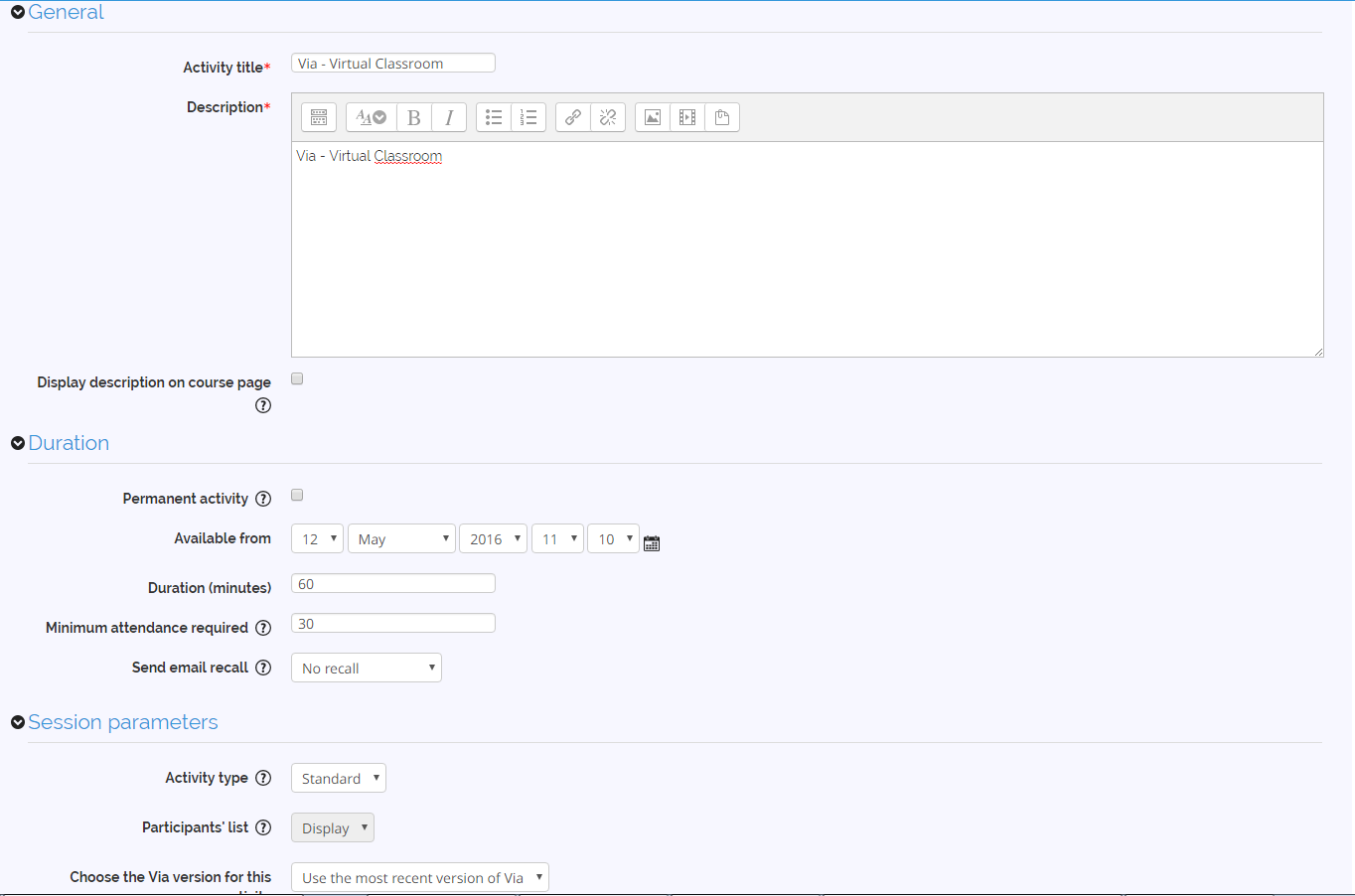
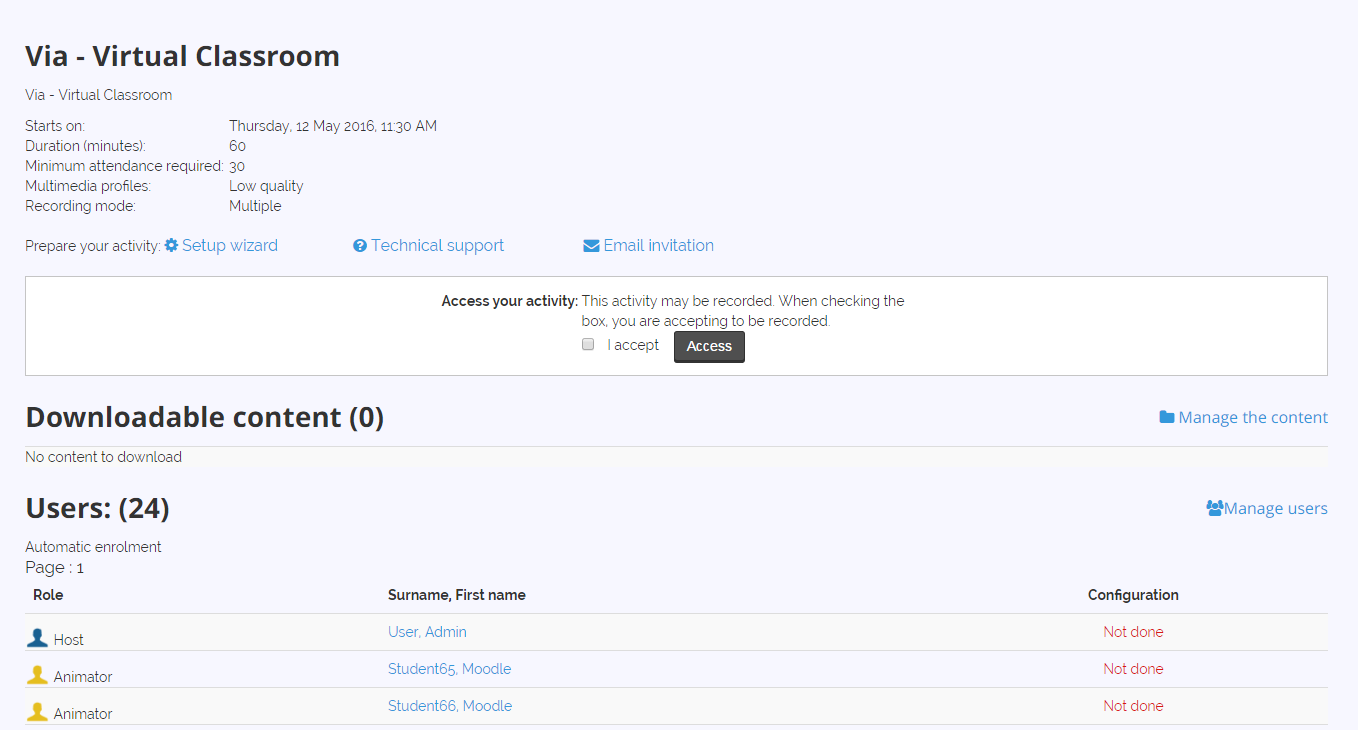
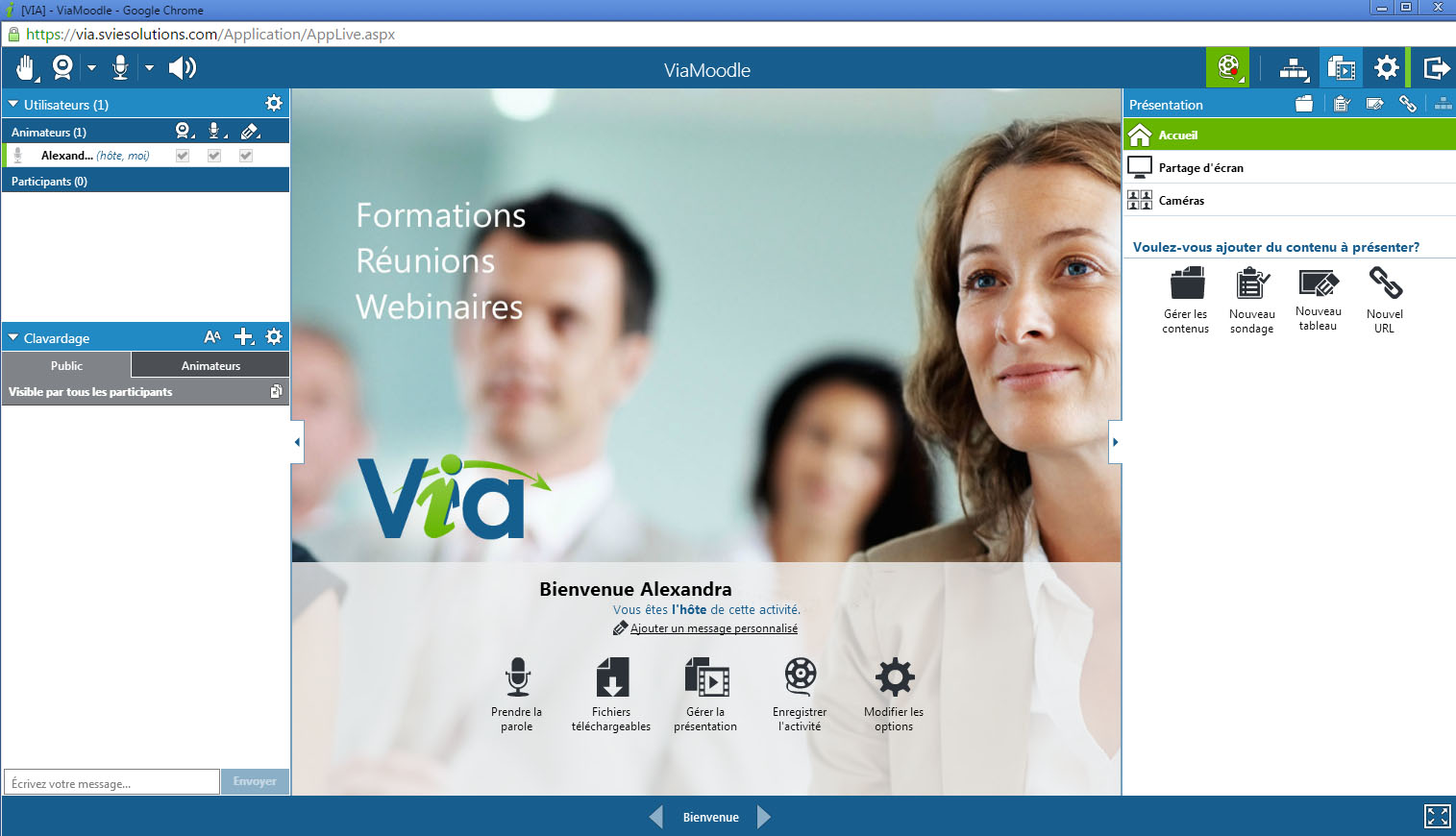
The Via activity module provides integration between Moodle and Via, our virtual classroom tool. It is designed to simplify the use of synchronous events within Moodle. It provides a single sign on between the two systems with easy event creation and management.
Price option: Free

Supports Moodle 2.6-4.3 See all versions
Latest release: 2 years ago
Installations: 122
Downloads (last 90 days): 58

Frankenstyle name: mod_via
Activities

Comments

Comments are no longer open for new posts. Existing comments remain available to read.

In order to review this plugin, the version(s) of Moodle for which it is intended needs to be specified. You can find this by navigating to the plugin, going to the Download versions tab, and clicking on the Edit details link for the most recent version. Under the Supported and/or required software section, select the Moodle versions for which that particular version of the plugin is designed to work with and then Save changes. Peace - Anthony
Sorry for not catching the update. After updating it, it helps to either comment here or under Administration to "Schedule this plugin for re-approval". I have put it back in the queue to be reviewed again. Peace - Anthony
I was checking with Aparup about the UApi folder. It was unclear how that is used. I have security concerns about the Auth.php possibly being exploited. It would help if we understood how it was actually used and possibly even creating a temporary via account we could use for testing purposes. Peace - Anthony
p.s. - You may also want to consider renaming the Github repository so that it follows the recommended naming convention - so in this case moodle-mod_via.git
Many thanks for the updated version. I see that you have added the boilerplates with licensing and copyright information to most files. I noticed that some of the error strings in the lang file contained both English and French which does not seem ideal. In the UApi/Auth.php file I noticed a call to php://input but did not see how the UApi folder was being used and called. How is the input validated? Would it be appropriate to use Moodle's required_param to sanitize the data? I am also concerned about the instruction in the README file to copy the UApi folder to the root folder as that breaks the modularity of things. I wonder if a better approach might be to recommend creating a symbolic link. I will need to think about that. For now, I am going to mark this as needing more work while we consider the use of php://input and the UApi folder issues. Peace - Anthony
I would like it to be clearer that this activity module is connected to services provided by http://sviesolutions.com/. In looking at some of the code I would also make the following requests:
1) the GPL license needs to be explicity declared - I suggest doing this at least in the version.php file with the typical Moodle boilerplate - ideally this boilerplate is in all of the files you have created or modified. See http://docs.moodle.org/dev/version.php for a sample.
I also noticed some files having ^M at the end of the lines indicating that you are likely working from Windows machines or an editor that is not saving the files with UTF-8 encoding. Those should be cleaned up.
I would also recommend using all lowercase file names. On Windows servers Auth.php and auth.php might be the same. As long as you are consistent it is not likely to be an issue but I prefer to see all lower case files.
I also noticed a file that phpxml.php uses the Artistic license which is GPL compatible so that is OK. All files must meet that criteria. When in doubt, you can check against http://www.gnu.org/licenses/license-list.html#GPLCompatibleLicenses
For now, until these issues are addressed, I am going to mark this plugin as needing more work. Please do not hesitate to let me know if there is anything I can do to be supportive of your efforts. Peace - Anthony
Hi, just a quick note to say it'll be better to have the short description above limited to say 3-4 lines max.
also consider adding (to useful links section) :
- code repository url
- bug tracker url
- website url