Silvio Kahl
Lead maintainer




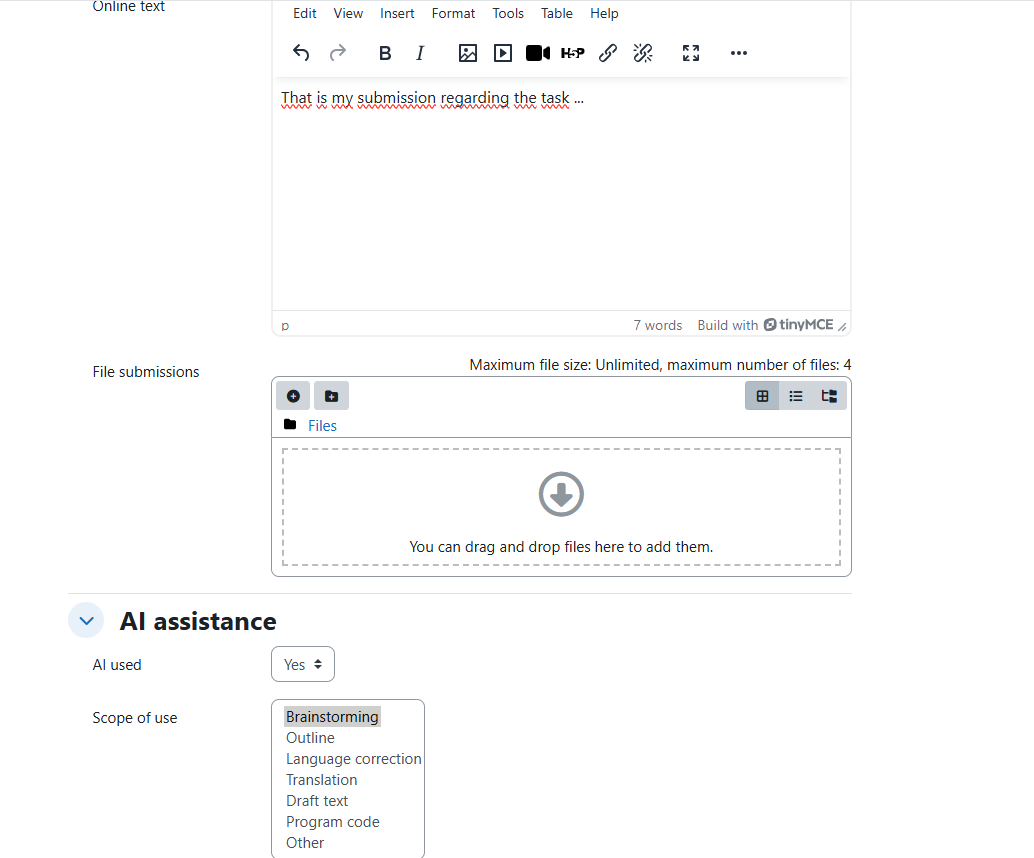
More than just an AI badge
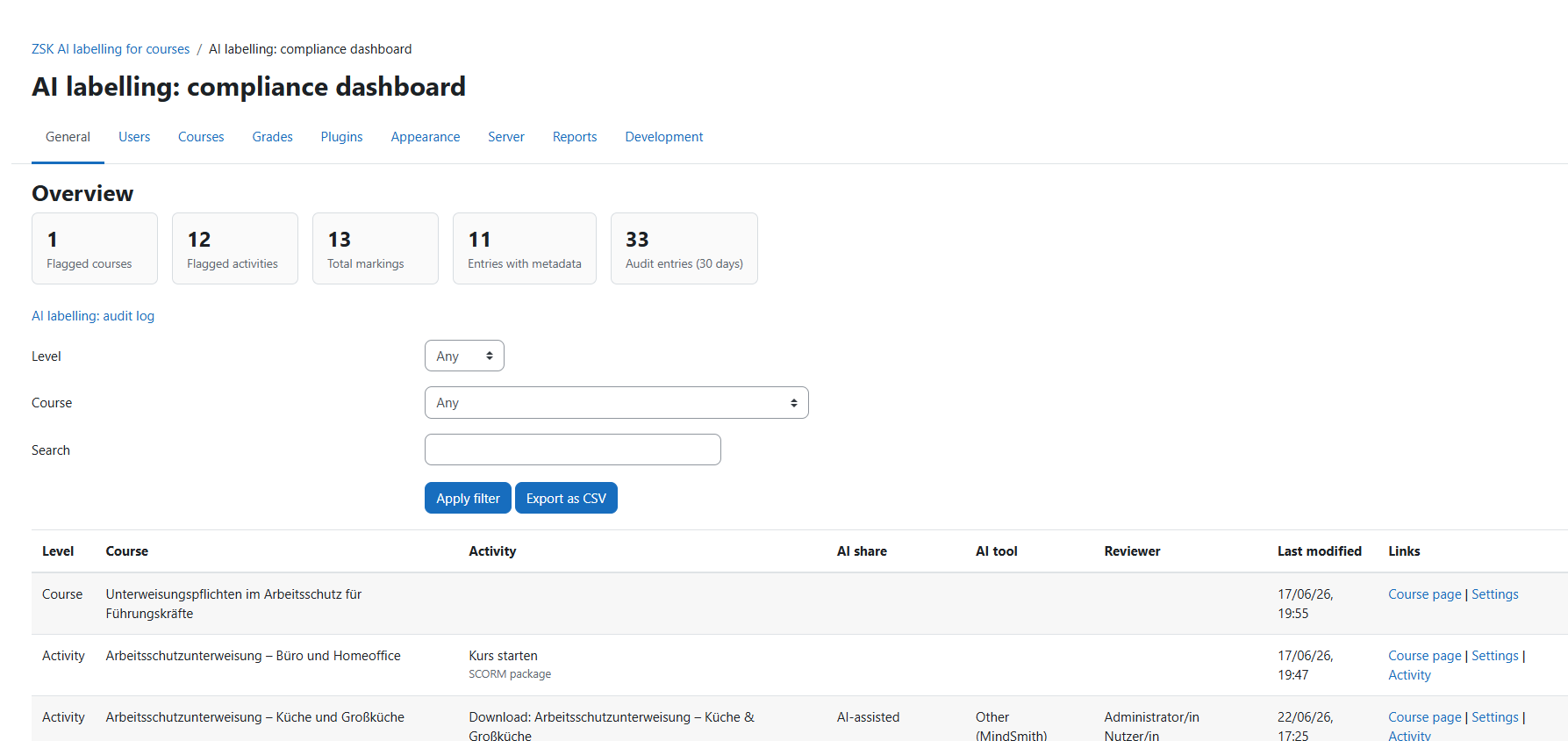
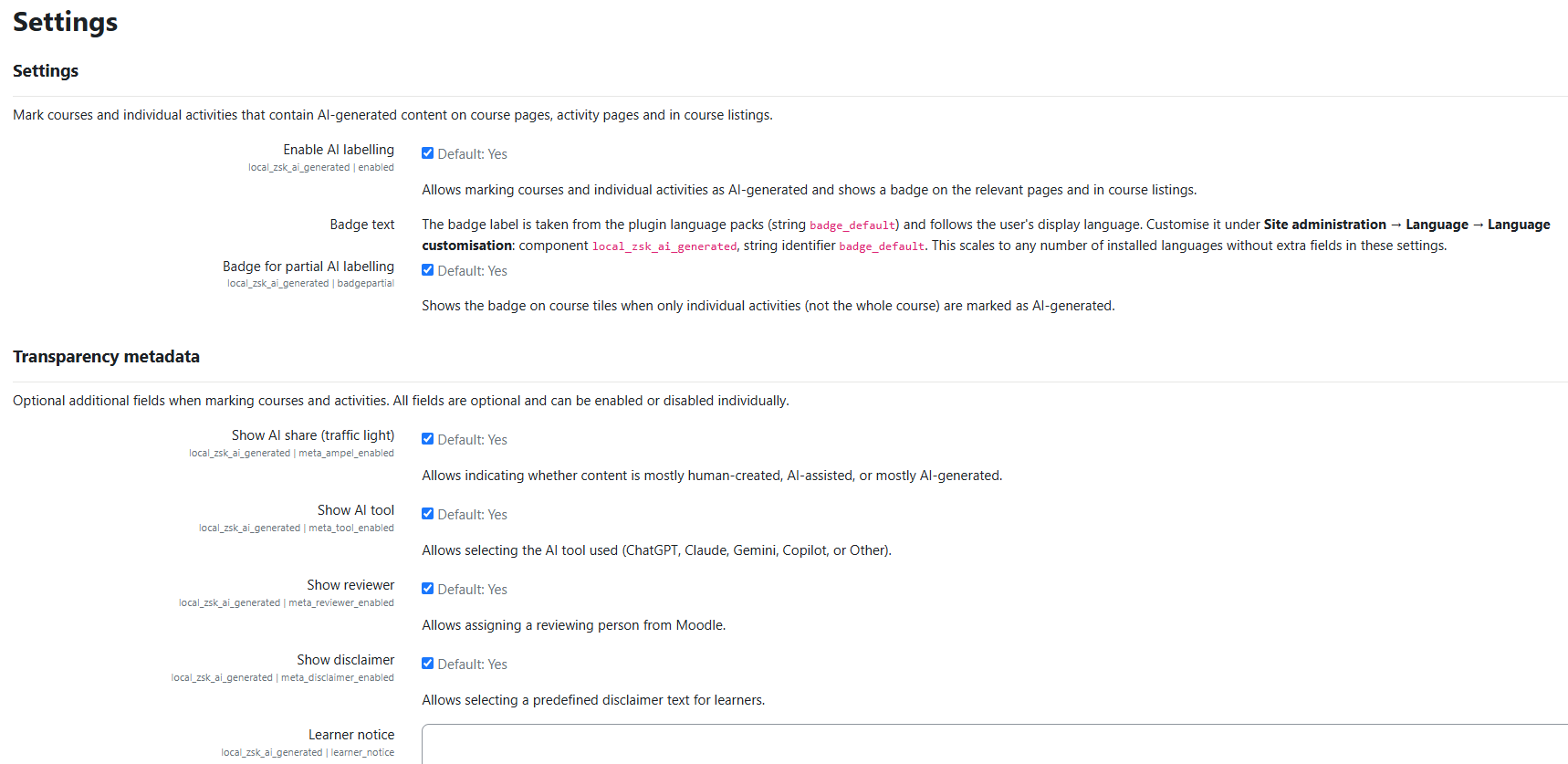
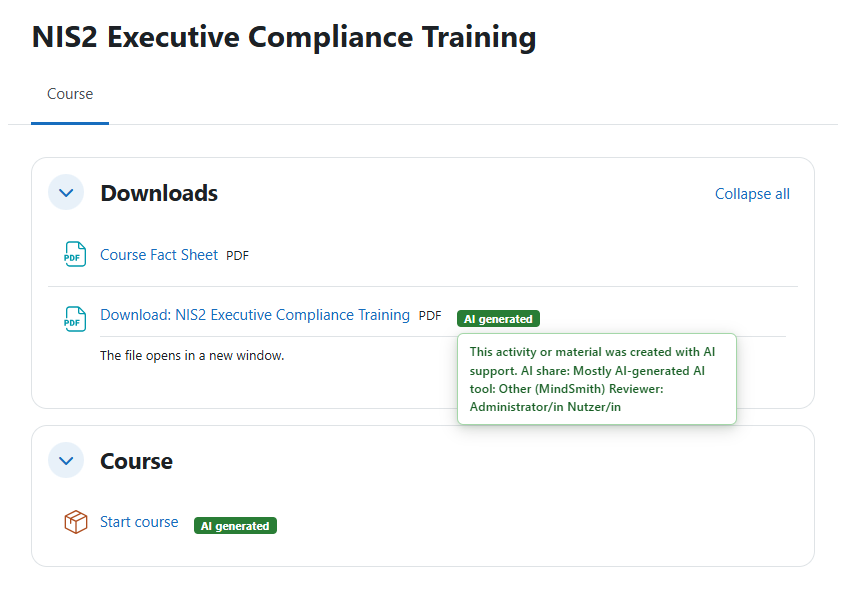
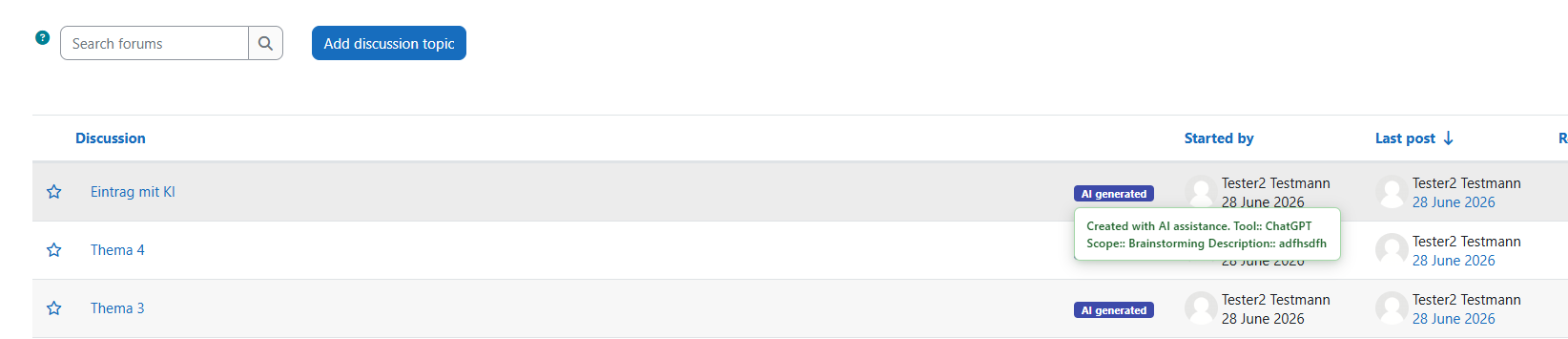
AI Transparency does more than just label content; the plugin can also document how AI was used.
For example, information such as the following can be recorded:
* AI system used (e.g., ChatGPT, Claude, or Gemini)
* Time of creation
* Extent of AI assistance
* Human review
* Quality assurance
* Individual transparency notes
This fosters trust rather than uncertainty. Students can see which content was created with the help of artificial intelligence and which has been professionally reviewed by the instructor. At the same time, educational institutions gain a consistent basis for transparency, documentation, and institutional AI policies.
Developed for education providers
AI Transparency helps universities, academies, and companies to:
* establish transparency regarding the use of artificial intelligence,
* make quality standards visible,
* implement institutional AI policies,
* support documentation and compliance requirements, and
* sustainably embed the responsible use of AI into the teaching and learning process. AI transparency is thus far more than just the labeling of individual pieces of content. It forms the foundation for a transparent and traceable approach to artificial intelligence across the entire Moodle platform.
AI Transparency – KI-Transparenz für Moodle
Transparenz beim Einsatz künstlicher Intelligenz – für Dozenten und Studenten
Künstliche Intelligenz ist längst Teil des Hochschulalltags. Dozenten erstellen Lernmaterialien mit Unterstützung von ChatGPT, Claude oder Gemini. Gleichzeitig nutzen auch Studenten KI-Werkzeuge bei Hausarbeiten, Programmieraufgaben oder Projektarbeiten.
Für Bildungseinrichtungen entsteht dadurch eine neue Herausforderung: Wie lässt sich der Einsatz künstlicher Intelligenz transparent, nachvollziehbar und verantwortungsvoll dokumentieren – ohne die didaktische Freiheit einzuschränken?
AI Transparency schafft hierfür ein einheitliches Transparenzmodell innerhalb von Moodle.
Dozenten können KI-generierte oder KI-unterstützte Kursinhalte kennzeichnen und mit zusätzlichen Informationen versehen. Perspektivisch können auch Studenten den Umfang ihrer KI-Unterstützung bei Abgaben dokumentieren. Beide Anwendungsfälle folgen demselben Prinzip und fördern einen offenen, verantwortungsvollen Umgang mit künstlicher Intelligenz.
Mehr als nur ein KI-Badge
AI Transparency kennzeichnet nicht nur Inhalte. Das Plugin dokumentiert auf Wunsch auch, wie KI eingesetzt wurde.
Beispielsweise können Informationen hinterlegt werden wie:
* verwendetes KI-System (z. B. ChatGPT, Claude oder Gemini)
* Zeitpunkt der Erstellung
* Umfang der KI-Unterstützung
* menschliche "berprüfung
* Qualitätssicherung
* individuelle Transparenzhinweise
Dadurch entsteht Vertrauen statt Unsicherheit. Studenten erkennen, welche Inhalte mit Unterstützung künstlicher Intelligenz entstanden sind und welche vom Dozenten fachlich geprüft wurden. Gleichzeitig erhalten Bildungseinrichtungen eine einheitliche Grundlage für Transparenz, Dokumentation und institutionelle KI-Richtlinien.
Für Bildunganbieter entwickelt
AI Transparency unterstützt Hochschulen, Akademien und Unternehmen dabei,
* Transparenz beim Einsatz künstlicher Intelligenz zu schaffen,
* Qualitätsstandards sichtbar zu machen,
* institutionelle KI-Richtlinien umzusetzen,
* Dokumentations- und Compliance-Anforderungen zu unterstützen und
* den verantwortungsvollen Einsatz von KI nachhaltig im Lehr- und Lernprozess zu etablieren.
AI Transparency ist damit weit mehr als eine Kennzeichnung einzelner Inhalte. Es bildet die Grundlage für einen transparenten und nachvollziehbaren Umgang mit künstlicher Intelligenz innerhalb der gesamten Moodle-Plattform.
Achtung: Wenn auch Studenten Inhalte abgeben dürfen und diese als KI-generiert markieren, müssen dringend beide ZIP-Dateien (Plugins) installiert werden.
Empfehlung: Laden Sie beide herunter und übergeben Sie diese an Ihren Moodle-Administrator. Der wird wissen, was zu tun ist.
